Unknown's avatar

About reveds

Occupation: Pastor, Ebenezer Presbyterian Church, Lennox, SD Education: BS - Christian Education, Sterling College; MDiv. - Princeton Theological Seminary Family: Married, with Four children. Hobbies: Running (will someday run a marathon), Sci-Fi (especially Doctor Who and Sherlock), Theater, and anything else my kids will let me do.

Making All Things New

“And he who was seated on the throne said, “Behold, I am making all things new.”
(Revelation 21:5)

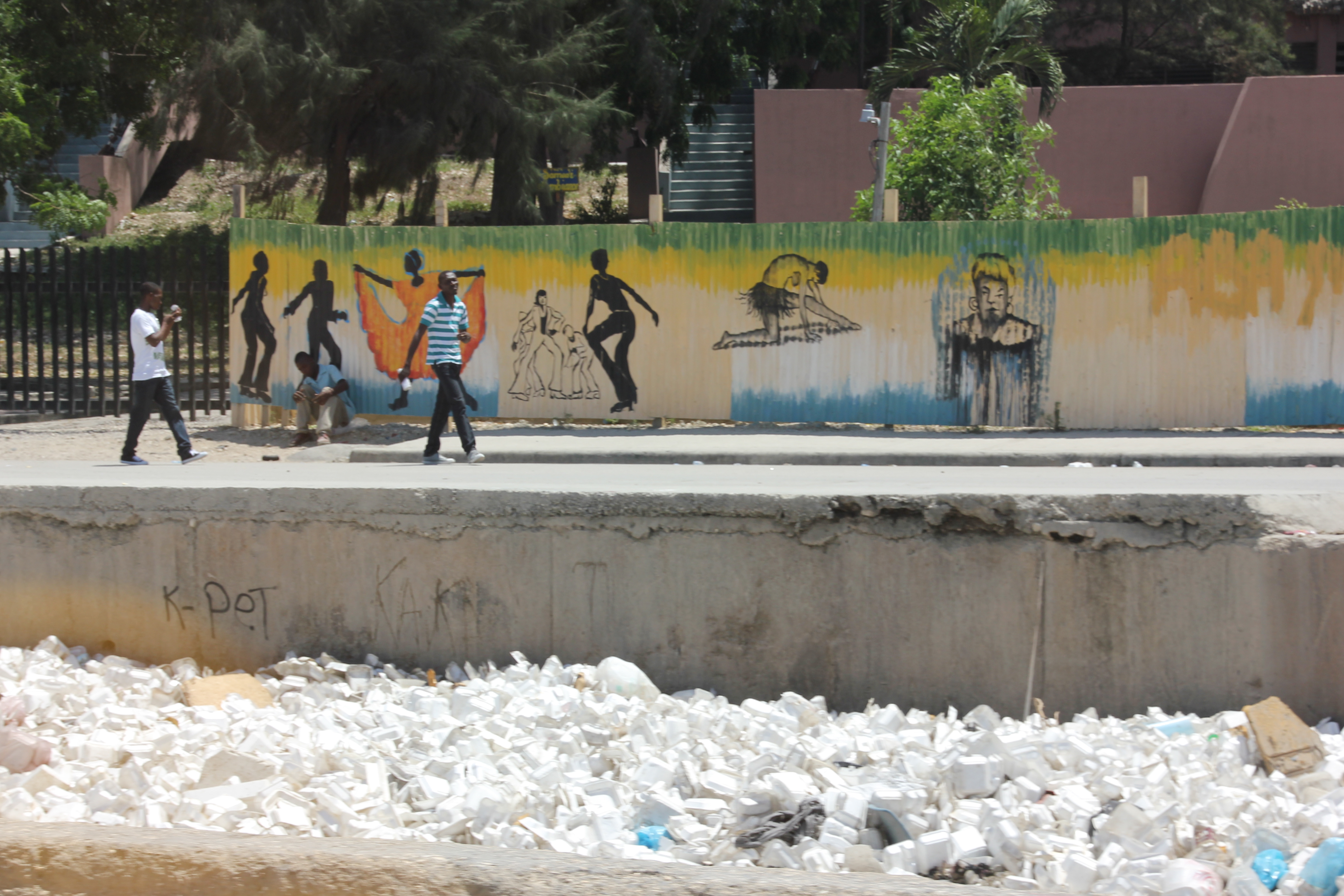
One of the lasting images that is etched into my consciousness from my trip to Haiti was the waste and debris that litteredthelandscape.  What could be a lush and beautiful land is polluted with trash; it is everywhere you look.  The pristine beaches are covered with it; in the open fields it seems to grow upfrom the ground; in the cities, the refuse flows like a stream.
IMG_1502

It was hard not to react to such a scene.  I didn’t want my disgust to show; this was someone’s else’s home, for some, this was all they knew.

My reaction to this image surprised me.  Once the initial shock and disgust wore off, I was overcome with a sense of hope.  I turned to God, longing for the day when he would make all things new.

It reminded me a lot of when I was mucking out basements after our spring flood.  The waste, the flotsam and jetsam, that was my heart.  The debris, the litter, the stain that filled the spillways of Haiti, that is my heart as well.

But by the power of Christ, the one who brings life to the dead, who brings hope to those who despair, the one who liberates the captive – by the power of Christ, even my heart is made new.  It would be a miracle to go back to Haiti and find it clean, rebuilt, and prosperous.  But that is the miracle that Christ has already brought to my heart – and that heart work is an even greater transformation.

I recently came upon a song by one of my favorite groups, Güngor, called When Death Dies.  Musically, the song is incredible, and I am ashamed to even own a guitar when I see how well Michael Gungor plays.  But lyrically, the message of the song is wonderful, and I think it ties in perfectly with this hope for Haiti, and this hope for all our hearts.

When Death Dies

Like the waters flooding the desert
Like the sunrise showing all things

Where it comes flowers grow
Lions sleep, gravestones roll
Where death dies all things live
Where it comes poor men feast
Kings fall down to their knees
When death dies all things live
All things live

Like a woman searching and finding love
Like an ocean buried and bursting forth

Where it comes flowers grow
Lions sleep, gravestones roll
Where death dies all things come alive
Where it comes water’s clean
Children fed
All believe

When death dies all things live
All things live

 By the power of Christ, death has died, it has lost it sting, and the stone is rolled away, all things come alive.

May you, may I, know and live in that power today!

SDG

Here’s the video of the song:

Staying on the Vine

“I am the vine; you are the branches.  Whoever abides in me and I in him,
he it is that bears much fruit, for apart from me you can do nothing.”
(John 15:5)

I have a knee jerk reaction whenever I hear someone try to succinctly state what the Christian life is all about.  Because we are talking about life, any description cannot be succinct.  Any attempt to summarize the Christian faith and life will inevitably leave something out.  Given the nature of this brief, hastily written, belated midweek message, I know I will omit a thing or two as well, that’s why I keep writing week after week.

Still, in preparation for my sermon this week on Matthew 21:18-22, the story of Jesus cursing the barren fig tree, my mind has been racing around the idea of how the Christian life is about being fruitful.  The fig tree represented Israel.  The tree’s show of fullness and health only masked it’s emptiness; there was no fruit to be found.  Israel’s pomp and hyper-religious production only masked it’s emptiness; they failed to recognize their King, they had turned a house of prayer into a marketplace and den of thieves.  What had been meant to be a light for the world had become a Sun-Tan salon for the spiritually superior, with the ensuing cancer eating away at the soul of the nation.

Those who are called God’s people are meant to be fruitful; to be a blessing to the nations, to be the light of world, the salt of the earth.  This was Israel’s calling, and the fig tree stood as a symbol, a parable, of the curse that would come because of their fruitlessness.

The message serves as a warning to the Church today.  Are we fruitful?  Is the evidence of God’s Spirit working among us showing forth in a growing love, joy, peace, patience, kindness, goodness, faithfulness, gentleness, and self-control – showing in the fellowship of the congregation and in the individual lives of its members?

This isn’t a call to work harder at being a better Christian.  The Pharisees and Priests in Israel, the “religiously serious” had a pretty good handle on how to work harder at doing right by God – and Jesus called them whitewashed tombs.

No, the answer to fruitfulness in the Christian life is not doing more stuff.  And here’s where I might narrow the focus a bit:

The purpose of the Christian life is not in the doing, it is in the being.  Christ did not come so that we could be better people, so that we could have the encouragement to try harder, or so that we could have a better example of how to live.

No.  Christ came to make us a new creation, to cover our brokenness with his perfection, so that our lives would become lives of thanksgiving and praise to God for such a gift of salvation.  The fruitfulness that Christ is looking for in the life of His church, in the lives of His disciples, is not the product of harder effort, but of true fellowship with him.

This is what Jesus is getting at in our reading from John.   We are branches grafted into the vine.  Our strength, our fruitfulness, does not come from the branch, from ourselves, but from the vine which is our source of life.  When we are connected, fellowshipping, in union with Christ, our lives will bear the natural consequence of that union: fruitfulness.  When we are absent from Christ, when we fail to listen and obey His word, when prayer and fellowship with Christ is forsaken, then we will cease to bear fruit.

Fruitfulness is the natural consequence of faithfulness to Christ.

We have some friends who like to burn scented candles in their homes.  When you go to visit, the aroma of their candles permeate and saturate your being.  When you leave, you carry that aroma with you.

So it is with Christ.  The beautiful aroma of sweet fellowship with Christ permeate and saturates your life, until everything you do is an overflowing of that fellowship, and comes forth like fruit from the vine.

May your fellowship with Christ be seen in the fruitfulness of your life.

SDG