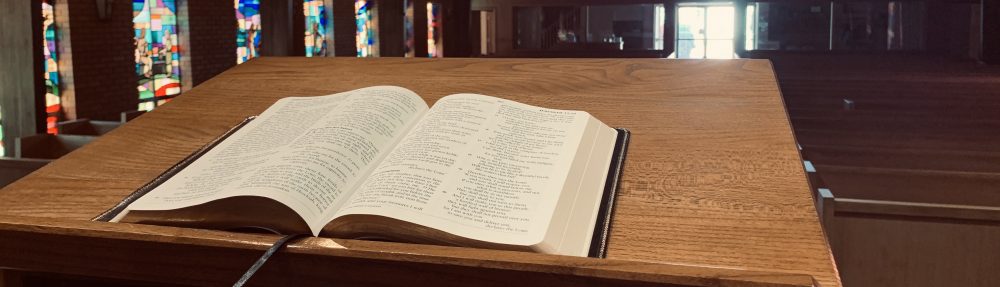

“One generation shall commend your works to another, and shall declare your mighty acts.”
(Psalm 145:4, ESV)
Have you established an inheritance for your children and grandchildren? It’s something I think everyone hopes to do, leave something behind as a blessing for our children and their children. When I go, I will leave everything behind. I would leave my family with their debt of gratitude rather than simply in debt. As a pastor and father of four, to leave my family with a financial inheritance will take a lot of planning and discipline, but the joy of giving the gift to future generations will be worth it.
However, the generations that follow us will inherit a great many things above and beyond a financial gift or obligation. I have inherited my father’s sense of humor (or lack thereof), his sense of physical discipline (or lack thereof), and his astonishingly good looks (or lack… wait a minute). Whether intentionally or not, we pass along from one generation to the next our priorities, passions, perspectives. Our children may gain their inheritance directly, through our instruction and advice, or indirectly, by what they observe and overhear in our lives.
Have you given any thought to the Spiritual Inheritance that you will leave behind? If your family were asked today to describe your faith, could they give an informed response? Have they seen your faith evidenced in the way you live, the way you work, the things you say? Have you shared your faith with your family, have you passed it along to the next generation?
Consider Psalm 78:5-7, “He established a testimony in Jacob and appointed a law in Israel, which he commanded our fathers to teach to their children, that the next generation might know them, the children yet unborn, and arise and tell them to their children, so that they should set their hope in God and not forget the works of God, but keep his commandments,” and Psalm 145, “One generation shall commend your works to another.” Even Paul, in his letter to Timothy said, “I am reminded of your sincere faith, a faith that dwelt secure first in your grandmother Lois and your mother Eunice and now, I am sure, dwells in you as well” (2 Timothy 1:5). God’s word teaches us that our faith is handed from one generation to the next, like a baton in a relay. If we do not actively share our faith and teach it to the next generation, we have dropped the baton and set our children up for failure. John Bunyan, the author of Pilgrim’s Progress, once wrote, “Your children have souls, and they must be born of God as well as of you, or they perish. And know also, that unless you are very vigilant in your behavior toward and before them, they may perish through you: the thoughts of which should provoke you, both to instruct, and also to correct them.”
What can you do then, to be sure you pass your faith along from generation to generation? Here are a few suggestions:
- Be faithful in worship, and bring your family! I can’t tell you how many times I’ve heard people say, “I won’t be coming to church this week; we have family/friends visiting.” Can they not come to church? Invite them, urge them, implore them to worship with you. Nothing shows your love for your family and friends more than providing them an opportunity to come before the Lord in worship and praise, to hear His Word proclaimed, and to receive the blessing of His presence.
- Worship as a family. This doesn’t have to be complicated. Read one of the devotions provided by the church together each day, and pray the suggested prayer. If you are inclined, sing a hymn or praise chorus too. Mathew Henry wrote, “They that pray in the family do well; they that pray and read the Scriptures do better; but they that pray, and read, and sing do best of all.” If you’d like more resources on starting family worship visit: http://familyworshipguide.net/.
- Read your Bible often, and discuss it as a family. Whatever you do for family worship, make sure that you also spend time reading the Bible, both personally and together as a family. Every evening, I read to our children one chapter from the Bible. If they have questions, I try to answer them. Sometimes I try to clarify what we’ve read. Other times, I ask them what they think about the passage. More than just reading the Bible let it engage you and your family. Share with your wife, kids, friends, your favorite book of the Bible, tell them what passages have great meaning for you, ask which ones they like. John Quincy Adams noted, “So great is my veneration for the Bible that the earlier my children begin to read it the more confident will be my hope that they will prove useful citizens of their country and respectable members of society. I have for many years made it a practice to read through the Bible once a year.”
Let it be known, from generation to generation, that your faith was genuine and sincere. Let there be no doubt of your love for God through the grace of our Lord Jesus Christ and the power of His Holy Spirit. May we never forsake this sacred duty to make known God’s faithfulness to all generations (Psalm 89:1).
 Reveds's Blog