Haiti Mission 2014 – Day 1 – Love One Another

“Beloved, let us love one another, for love is of God, and anyone who loves is born of God, and knows God, for God is love.” (1 John 4:7-8)

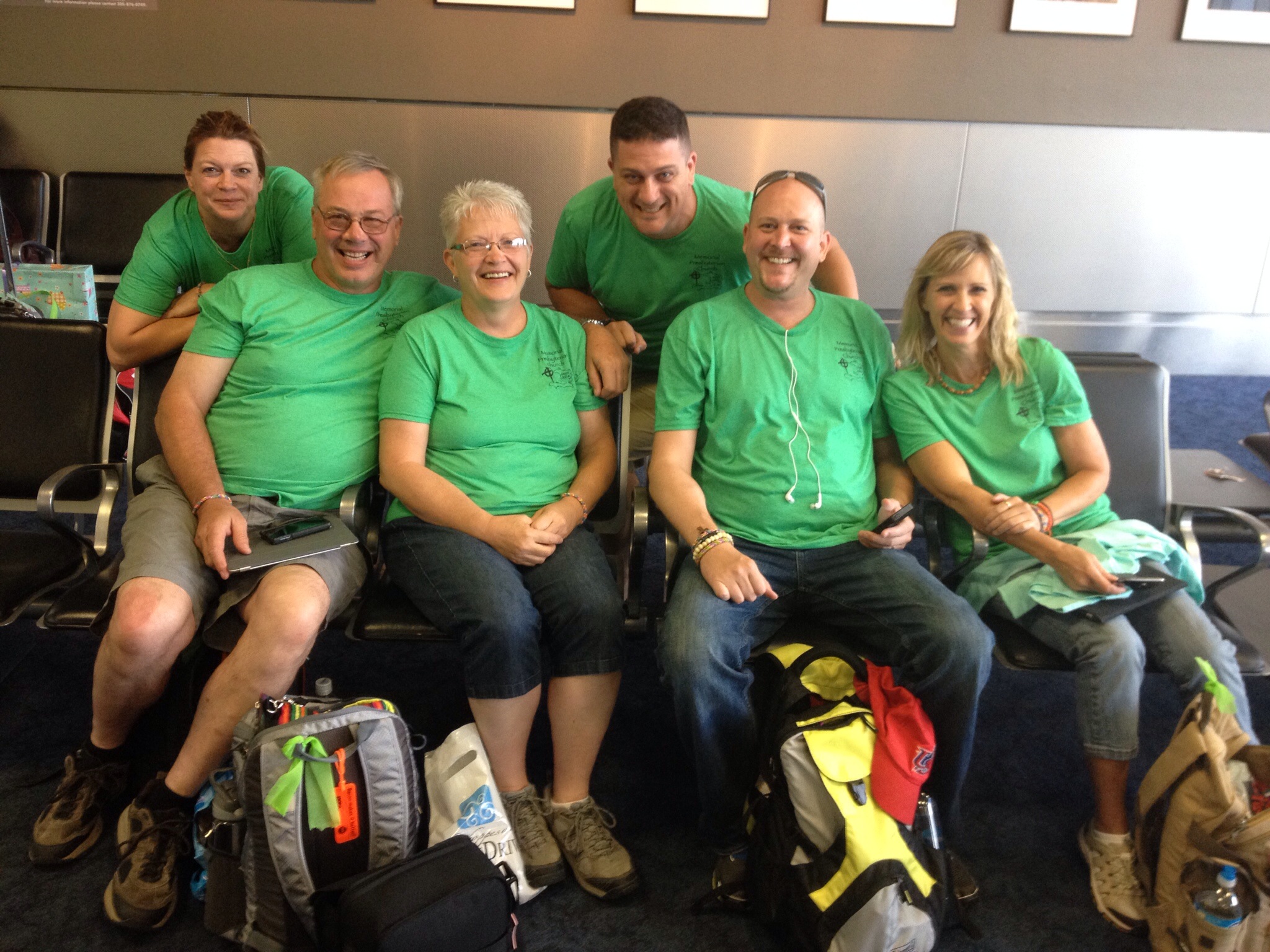
We’ve made it to Bamboula Beach, in Torbec, Haiti – our center of operations for the next week on our Mission trip. It’s hot and humid here. We expected that, but I don’t think any of us were really prepared for just what kind of toll this heat and humidity can take on you. We’ll be drinking lots of fluids, and praying for a break in the heat.

Our study on the Fruit of the Spirit began tonight with a study on Love. Love is a word that gets thrown around pretty casually today. In one breath someone will say, “I love my wife,” and with the very next breath say, “I’d love a cup of coffee.” I’m hoping that our definition of love adapts to our usage.

We tend to love that which benefits us. If a bit of technology (like your phone or tablet – ahem!) makes life, work, play, a little easier – then we tend to treat those things with special attention, spend a little more time with them than we ought, and give them a central place in my life. Being here in Haiti, with no cell coverage, and iffy WIFI access, I’ve noticed how often I turn to my iWhatever whenever I don’t know what else to do. (Maybe this week away will help me enact a tech-fast – unintended blessing). Is this love – not really, but it looks and acts a lot like it.

What we learn of love in Scripture is not a love that exists for selfish gain, but rather a love that gives sacrificially. Jesus said in John 15, “Great love has no one than this, that someone lay down his life for his friends.” Paul wrote in Romans 5:8, “But God shows his love for us in that while we were still sinners, Christ died for us.” 1 John 4:9 teaches, “In this the love of God was made manifest among us, that God sent His only Son into the world, that we might live though Him.” This is love, sacrificial, merciful, giving love.

When trust in Christ for our life and our salvation, when we walk in the power of His Spirit, when we come to know the Amazing Love of God, then we will live in and grow in that love. We will love more like He has loved us.

That’s what brings us here to Haiti: Love. God loved us with a love that would bring us life and transform us with hope. Because that love has been borne in us, we serve one another in that love. We sacrifice our time at work and with our families. We do without so that we can afford to be here. We sweat through the night and long for our comfortable beds, cars, etc… But in God’s amazing love, none of it really seems like a sacrifice at all. When we consider all that He has given, whatever we give up here seems so small.

I am so honored to be able to serve a congregation, and this particular mission team, who have known the love of God, and as they grow in that love, are dedicated to loving others. I pray that over this next week, we will not only see the love of God in our own lives, but we will be able to pass that love on to those whom we serve.

SDG
IMG_0273-0.JPG

IMG_0271-0.JPG

IMG_0274-1.JPG

The Gospel According to Mephibosheth

“And David said to him, “do not fear, for I will show you kindness
for the sake of your father Jonathon… and you shall eat at my table always.”
(2 Sam 9:7)

One of my absolute favorite stories in the Old Testament is a one chapter side note about a guy name Mephibosheth.  We first read about this young man in chapter 4 of 2 Samuel, and his story begins with tragedy.  Mephibosheth was the son of Jonathon, the grandson of King Saul, a potential heir to the throne of Israel.  He was only 5 years old when Jonathon and Saul were killed in battle, and with their death “all of Israel was dismayed” and panic set in throughout the land.  Fearing that the only surviving heir to the throne would be targeted for assassination, Mephibosheth was carried off by his nurse, but she fell in her haste, and he became lame.

The story of Mephibosheth picks up again in 2 Samuel chapter 9.  The civil war within Israel had ended, and David was anointed as King.  Mephibosheth is hiding in a place called Lo-Debar, which literally means “nowhere”, about as far away from Jerusalem as he could get.  He was hiding, hoping to keep out of David’s reach – hoping never to be seen as a threat to the throne.

Amazingly, one of David’s first acts as King was to search for any survivors of Jonathon’s family, not to eliminate any potential threat, but to show kindness to him.  Ziba, a servant from the house of Saul was there, and he told David about Jonathon’s son, Mephibosheth, and was immediately sent out to bring him before King David.

Can you imagine what must have been going through Mephibosheth’s head when Ziba came to his door?  His family was gone, his claim to the throne lost., his life was forfeit to the king, and he was a cripple.  What could he offer, what claim could he make before the king that would possibly bring him salvation?  Imagine the uncertainty, the fear that would have coursed through his veins as he stumbled before the throne and knelt before this king.

I said before that this story is marked with tragedy; but it does not end in tragedy.  David shows kindness to Mephibosheth in the midst of his misery – David shows him grace.  David is gracious to Mephibosheth, not because of anything he has done, but because of David’s love for Jonathon.  David restores this broken, terrified man to everything he had lost.  All that belonged to Saul was restored to him, and he was given a permanent place at David’s table, like one of the king’s own sons.

What a picture of grace.  You’d be hard-pressed to find another story in the Old Testament that so succinctly tells the gospel in such a beautiful way.

You see, I am Mephibosheth.  In my sin, I have fallen from grace, and I am broken, lame, and unable to stand before the Lord.  In my shame, I run from God, I hide myself from His gaze, I fear His judgment.

While I am far off from God, His Spirit comes to me, like the faithful servant Ziba, and brings me before His throne, and while I ought to be condemned, God shows me His undeserved kindness.  God shows me grace, not because of anything I have done, not because of any potential He sees in me, but because of His beloved, Jesus Christ, who has died in my place.  God credits to me the righteousness of another, He secures for me an everlasting inheritance, He sets me at His table as one of His sons.

This is the Gospel According to Mephibosheth.  Praise be to God for His amazing grace!

SDG