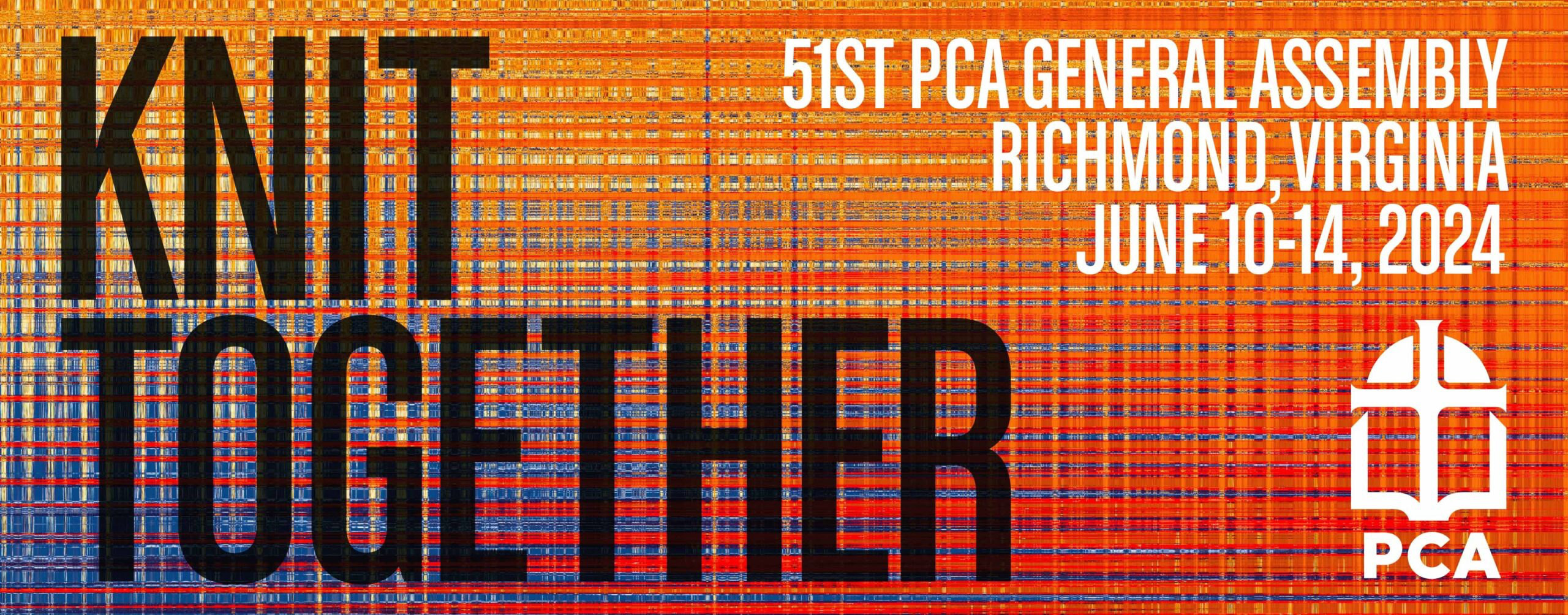
Today was the last day of the 51st General Assembly of the Presbyterian Church in America, and that means… Overtures!!!
In all there were 29 overtures brought before the General Assembly this year. Typically, overtures are written by a session or presbytery, then brought before the General Assembly in order to amend the Book of Church Order, establish a study commission, or some other call for the Church Court to act on a certain issue. A majority of the overtures were dealt with by the Committee of Commissioners, who made their recommendations to answer the overtures in the affirmative or in the negative, and the Assembly accepted their recommendations all together in one motion. 8 of the 29 overtures, however, were dealt with individually, with much discussion. I will try to summarize the overtures and the decisions made here.
Overture 17 – Requiring Mandatory Background Checks for Church Officers
The original overture prescribed a very detailed procedure for Presbyteries and Sessions to follow in order to require background checks for church officers. The committee presented a substitute motion to which encourages Presbyteries and Sessions to adopt policies for conducting background checks on every candidate for office. The motion was carried by voice vote.
Overture 26 – To Expand Representation of Accused Persons
This overture was brought forth to clarify who may assist an accused person in a case before a Session. The motion reads, “no professional counsel shall be permitted as such to appear and plead in 14 cases of process in any court; but an accused person may, if he desires it, be represented before the Session or the Presbytery by any member in good standing of a church in the same Presbytery or by any Teaching Elder member of that Presbytery, or before the General Assembly by any member in good standing in the PCA. The motion carried 1456 to 119.
Overture 3 – To amend and give constitutional status to BCO 53 re: Preaching
This motion would have made Chapter 53 of the Book of Church Order, which defines preaching and its necessity in worship. The Directory of Worship portion of the BCO does not bear full constitutional authority, except for those passages on the Sacraments and Marriage. Overture 3 sought to amend Chapter 53, and give it full constitutional status. Arguments for the overture stated that doing this would be faithful to the scriptures and true to the reformed faith, and clarifying the role of preaching in worship. Those who argued against the overture said the action was unnecessary as the Westminster Standards already do make this clear. The overture failed 906 to 857.
Overture 13 – Commend letter on Gender Reassignment
The 50th General Assembly presented the report of a study commission which issued a letter regarding Gender Reassignment for Minors. Overture 13 sought to commend and encourage the distribution of that letter (click here). The overture carried 985 to 727.
Overture 33 – Study on the Church’s relationship to the book, “Jesus Calling”
The amended overture from the committee requests reports from the Committee on Discipleship Ministries and Mission to the World to be returned to the 52nd General Assembly regarding their connection with the Jesus Calling book and its appropriateness for Christian use. Jesus Calling, written by Sarah Young, a now deceased member of the PCA, calls into question the sufficiency of Scripture and essential presents her words and Jesus’ words. The overture carried 947-834.
Overture 1 – Witness Eligibility In Church Courts
OK – this one’s tricky.
The final overture sought to remove the requirement that competent witnesses in a Church court must hold to a belief in the existence of God and a future state of rewards and punishments. The argument being, as we seek the truth in a judicial hearing of the church, we should consider all sources, regardless of their beliefs.
The committee recommended that the assembly answer this overture in the negative, but there was a minority report calling for an affirmative vote, so we had a full debate on the matter. in the end, the minority report failed 880 to 843, and the committee recommendation was passed, thus answering the overture in the negative 950-750.
It is important to remember that any changes approved by the General Assembly must now go back to the presbyteries to be ratified by 2/3rds vote. If an overture is approved by the presbyteries, it is then voted upon again at the following General Assembly.
Summary
While ending General Assembly business with overtures leaves us a little on edge after debating and even disagreeing on the best course of action for the church, that should not overshadow the overall positive atmosphere of the Church’s gathering. There is a lot of great things happening in the PCA. While other denominations are shrinking, the PCA continues to grow. While other churches are struggling in their identity and faithfulness to God’s Word, the PCA stands strong in the reformed faith and boldly proclaims the inherent, infallible, and authoritative Word of God. We are a church committed to the great commission; evangelizing the lost and making disciples of all nations.
God has greatly blessed the PCA, and it is a joy to serve alongside so many faithful and caring fathers and brothers. It was great to connect with old fiends, and to make new ones as well. May God continue to richly bless his Church, and may we strive to bring God glory in all we do.
SDG

