Christianity without a Safety Net

“Trust in the LORD with all your heart, and do not lean on your own understanding.”
(Proverbs 3:5)

Facing a serious writer’s block today, I turned to the shelves and found something worth sharing.  This is from A.W. Tozer’s The Root of the Righteous, and says everything I couldn’t say in all my failed attempts.

True Faith Brings Committal

To many Christians Christ is little more than an idea, or at best an ideal; He is not a fact.  Millions of professed believers talk as if He were real and act as if He were not.  And always our actual position is to be discovered by the way we act, not by the way we talk.

We can prove our faith by our committal to it, and in no other way.  Any belief that does not command the one who holds it is not a real belief; it is a pseudo belief only.  And it might shock some of us profoundly if we were brought suddenly face to face with our beliefs and forced to test them in the fires of practical living.

Many of us Christians have become extremely skillful in arranging our lives so as to admit the truth of Christianity without being embarrassed by its implications.  We arrange things so that we can get on well enough without divine aid, while at the same time ostensibly seeking it.  We boast in the Lord but watch carefully that we never get caught depending on Him.  “The heart is deceitful above all things, and desperately wicked: who can know it?”

Pseudo faith always arranges a way out to serve in case God fails it.  Real faith knows only one way and gladly allows itself to be stripped of any second way or makeshift substitutes.  For true faith, it is either God or total collapse.  And not since Adam first stood up on the earth has God failed a single man or woman who trusted Him.

The man of pseudo faith will fight for his verbal creed but refuse flatly to allow himself to get into a predicament where his future must depend upon that creed being true.  He always provides himself with secondary ways of escape so he will have a way out if the roof caves in.

What we need very badly these days is a company of Christians who are prepared to trust God as completely now as they know they must do at the last day.  For each of us the time is surely coming when we shall have nothing but God.  Health and wealth and friends and hiding places will all be swept away and we shall have only God.  To the man of pseudo faith that is a terrifying thought, but to real faith it is one of the most comforting thoughts the heart can entertain.

It would be a tragedy indeed to come to the place where we have no other but God and find that we had not really been trusting God during the days of our earthly sojourn.  It would be better to invite God now to remove every false trust, to disengage our hearts from all secret hiding places and to bring us out into the open where we can discover for ourselves whether or not we actually trust Him.  That is a harsh cure for our troubles, but it is a sure one.  Gentler cures may be too weak to do the work.  And time is running out on us.

From, Tozer, A.W. The Root of The Righteous (Harrisburg, PA, Christian Pub, 1955)

More Recommended Reading

Every now and then I like to share with you the books that I have read.  I do this not to say, “Hey look at how much I read,” but, rather, to encourage you with some of the resources that have been an encouragement to me and to my ministry.  I hope that these resources will be a blessing to your faith.

Bonhoeffer: Pastor, Prophet, Martyr, Spy, by Eric Metaxes.  ”In Hitler’s Germany, a Lutheran pastor chooses resistance and pays with his life… Eric Metaxas tells Bonhoeffer’s story with passion and theological sophistication, often challenging revisionist accounts that make Bonhoeffer out to be a ‘humanist’ or ethicist for whom religious doctrine was easily disposable… Metaxas reminds us that there are forms of religion — respectable, domesticated, timid — that may end up doing the devil’s work for him.” — Wall Street Journal

One of the hardest things for a biography is making the written account of a life seem worthwhile reading, but that is precisely where Metaxes’ book excels.  Giving a comprehensive view of Bonhoeffer’s life, theology, work, and passion, the book makes you feel a part of the story more than a distant observer.  And while you know how the story ends, you find yourself praying for the impossible, for escape, release, for freedom and love to triumph (which, in some ways, truly does).

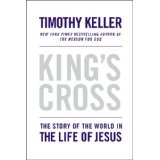
King’s Cross: The Story of the World in the Life of Jesus, by Tim Keller.  I have really come to enjoy Tim Keller’s writing.  In books like The Prodigal God, and Counterfeit Gods Keller applies great perspective and insight from Scripture to our lives today.  King’s Cross is not different.  Walking through the Gospel of Mark, Keller shows how Christ has come to cut through all the layers we have used to insulate our broken and dying souls, so that he might bring us to new life.  “Keller shows how the story of Jesus is at once cosmic, historical, and personal, calling each of us to look anew at our relationship with God.”

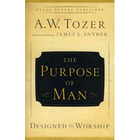
 The Purpose of Man: Designed for Worship, by A.W. Tozer.  We all can recite the first answer of the Westminster Catechism, “Man’s chief end is to glorify God and enjoy Him forever.”  But what does it really mean that our purpose in life is to live for God’s glory?  Tozer, a minister in the Christian and Missionary Alliance from 1919 to 1963, argues that in the Garden, man did not have to ask what it meant to worship God, because he lived with and communed with the very presence of God.  But since the fall, this sweet communion has been lost, and with it, we have also lost our very purpose in life.  Tozer suggests that Christ overcame “death and rose again from the grave… that he might make worshipers out of rebels.”  A powerful yet easy read, I highly recommend this for anyone who is interested in regaining a passion for worshiping God.

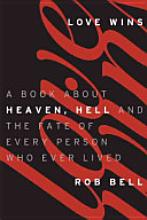
 Love Wins: A Book about Heaven, Hell, and the Fate of Every Person who ever Lived, by Rob Bell.  Okay, a disclaimer first.  I cannot wholeheartedly recommend this book.  As a matter of fact, I pretty much disagreed with everything written in it.  I did not appreciate Bell’s use of Scripture (taking things grossly out of context, or basing an entire argument on one verse while ignoring other passages that might contradict his conclusions), neither do I think that his “deconstructionist” (my term, not his) view of the Church, the Faith, or the Bible is at all helpful to the Kingdom of God.  I do not recommend this book to those who are not well versed in Scripture or secure in their reformed faith.

Still, I pass it along to you for this one reason: often times we who think we know what we believe and why need to be challenged out of our complacency (which was one of the reasons I attended Princeton Theological Seminary).  Being confronted by something that goes against everything you believe can sometimes help you come to articulate and reform your faith.  Bell’s book on Hell has done that for me.  There were times I couldn’t stand the book.  I’ve highlighted and written my comments throughout his pages.  But, praise the Lord, Bell caused me to go back to the Bible and reread what I thought it said, discover what it doesn’t say, and reevaluate my beliefs accordingly.  In that regard, I cautiously recommend this book (just don’t let your evangelical friends catch you reading it).

Good Reading!

SDG